

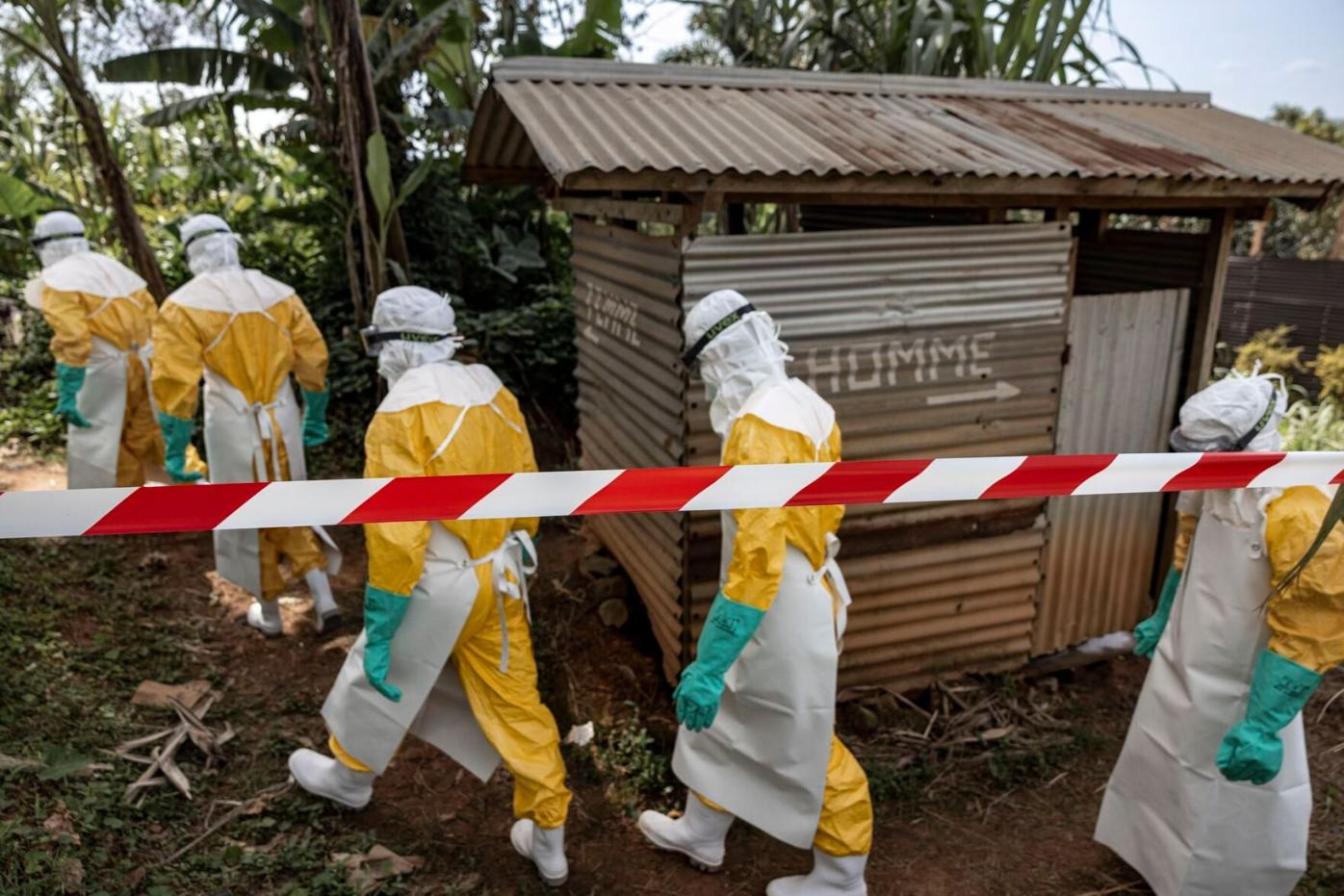
US Secretary of State Marco Rubio said Wednesday that Americans who test positive for Ebola while under observation at a facility in Kenya could be sent for treatment in the United States — an apparent shift from the Trump administration’s position that no Ebola cases would be allowed into the country.
“We’re not actually asking Kenya to set up treatment for Americans. I think the one that’s been very controversial is a misunderstanding. There is a facility that the Kenyans are allowing us to open. If there are any Americans that are exposed, potentially exposed, they will be transferred to this facility for observation,” Rubio said at a Senate Appropriations subcommittee hearing.
“If they test positive at any time while in that facility, we will remove them from Kenya and send them to the nearest treatment facility, either in Europe or in the home – or in the United States, to be treated for Ebola,” he said.
Rubio, who said last week that “we cannot and will not allow any cases of Ebola to enter the United States,” did not provide further details.
The Trump administration has been working to stand up a facility in Kenya to quarantine and treat Americans who have been exposed to Ebola in the area of the outbreak. However, the facility has faced significant backlash from Kenyan residents, and from health and medical experts in the US.
US officials had previously said that anyone at the Kenya facility who develops symptoms or tests positive would be evacuated to Europe. Dr. Jay Bhattacharya, director of the US National Institutes of Health and acting director of the US Centers for Disease Control and Prevention, said Wednesday that the facility was meant to provide “confidence” to Americans who may be exposed that there will be a dedicated place for them to cared for that they can reach quickly. Treating American patients in the US is still an option, depending on individual circumstances, he said.
“We’re not ruling out moving people out to the United States if we believe that case requires more intensive management,” Bhattacharya told CNN’s Anderson Cooper and Chief Medical Correspondent Dr. Sanjay Gupta on Wednesday on “Ebola: Facts and Fears,” a CNN All Access Subscriber Series event.
If they are exposed but don’t get sick, they can also quickly return to the DRC to help with the response again, he said.
A US official told CNN that the US facilities that would accept citizens who test positive would probably be in the continental United States, noting that the US has specialized hospitals including Atlanta’s Emory University. They also noted that there are “very strong facilities in Europe,” including the hospital in Germany that is treating an American doctor who tested positive for the virus, and that those are “much closer.”
The official said that if people are symptomatic or need care, they would be evacuated directly to Europe or the US and would not go to the Kenya facility, which they said is intended primarily for observation of people who have a high-risk exposure but are not symptomatic or in need of complex treatment.
The official told CNN that it was never the case that Americans who had tested positive would be blocked from coming to the US.
Bhattacharya told CNN that he hasn’t spoken with Rubio but that the goal is to avoid “inadvertent entry.” “The key thing is that, just make sure that there are no inadvertent cases imported in the United States, and to do that, we have these travel restrictions there for airports where screening is taking place for passengers that come from those areas, so they can get assessed by CDC teams rapidly. So far to date, I think, we’ve screened more than 2,000 passengers on this.”
Acting CDC director: US Ebola response isn’t diminished by cuts
Bhattacharya said that the United States has had a “very concerted response” since learning about the current Ebola outbreak and that cuts to the US Agency for International Development are not hindering it.
“The problem is really a technical challenge, and as far as will and technical expertise, we’ve been all in,” Bhattacharya told.