
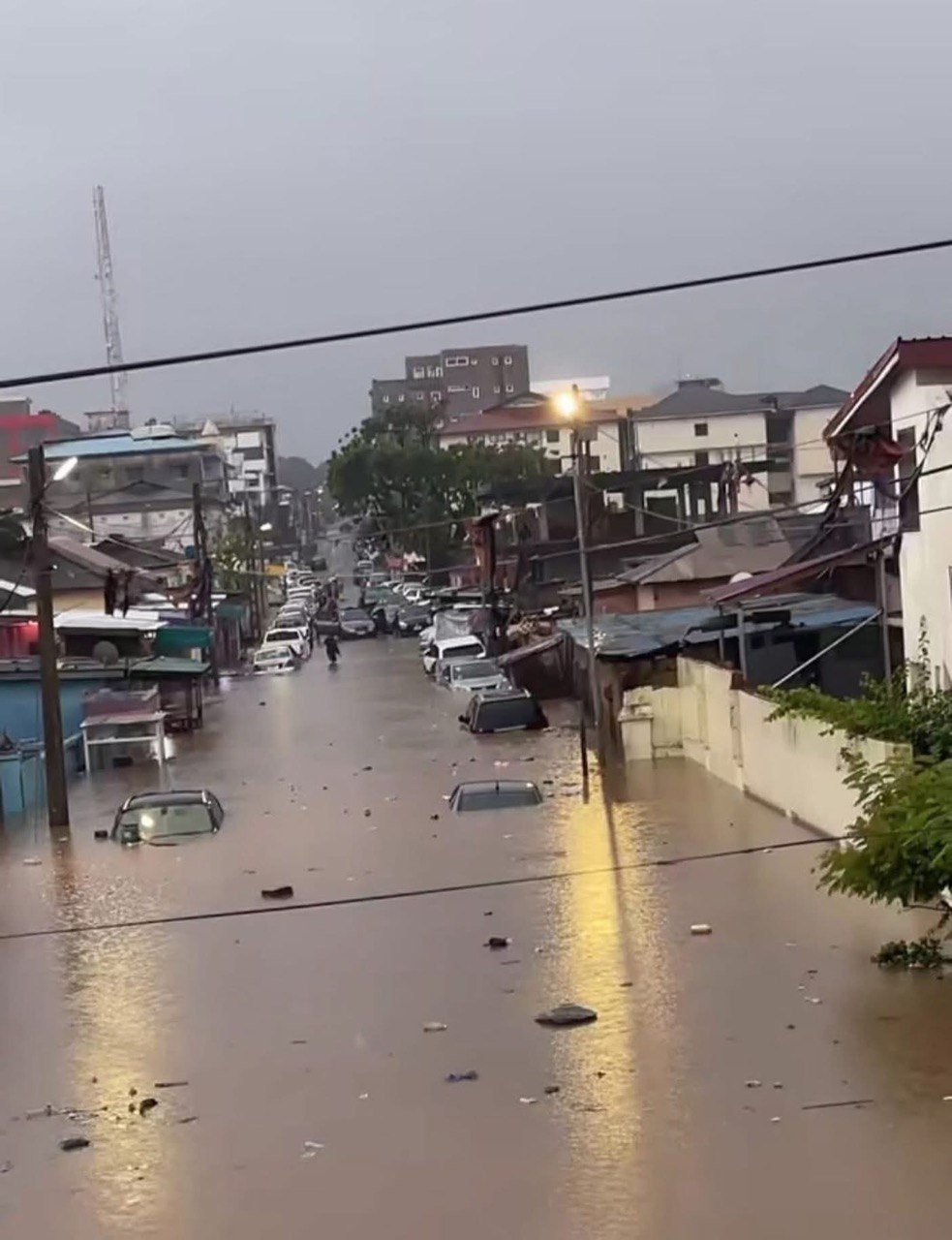
Several parts of Ghana experienced severe flooding on Monday morning after hours of heavy rainfall inundated major roads, disrupted traffic, and left numerous vehicles stranded in rising floodwaters.
The downpour, which began in the early hours of the morning, overwhelmed drainage systems in several communities, causing floodwaters to spill onto major roads and residential areas. In some locations, vehicles were almost completely submerged, with water levels rising close to the top of their windows as motorists abandoned their cars to seek safety.
Eyewitnesses described chaotic scenes as commuters struggled to navigate flooded roads, while emergency responders and residents worked together to assist stranded motorists and pedestrians. Several roads became impassable, forcing drivers to seek alternative routes and causing significant traffic congestion during the morning rush hour.
Residents in low-lying communities reported that floodwaters entered homes and business premises, damaging household items, furniture, electrical appliances, and merchandise. Many shop owners were seen attempting to salvage goods while others used buckets and pumps to remove water from their premises.
Although no official casualty figures had been released at the time of reporting, authorities urged the public to remain vigilant and avoid attempting to drive or walk through flooded roads, warning that rapidly rising waters could pose serious safety risks.
The Ghana Meteorological Agency (GMet) has indicated that more rainfall is expected in parts of the country over the coming days, advising residents, particularly those living in flood-prone communities, to monitor weather updates and follow safety instructions issued by emergency authorities.
The National Disaster Management Organisation (NADMO) said it is closely monitoring the situation and has begun assessing the extent of the damage in affected areas. Response teams have been deployed to assist vulnerable communities while officials continue to evaluate reports of flooded homes, blocked drains, and stranded residents.
Urban planners and environmental experts have once again highlighted the recurring challenge of flooding in many Ghanaian cities, attributing the situation to inadequate drainage infrastructure, unregulated development in waterways, poor waste disposal practices, and the obstruction of storm drains by refuse.
They have called for long-term investments in modern drainage systems, stricter enforcement of building regulations, routine desilting of drains, and greater public education on environmental sanitation to reduce the frequency and impact of urban flooding.
Residents affected by the flooding are also appealing to government authorities to accelerate ongoing drainage improvement projects and strengthen flood prevention measures as climate change continues to contribute to more intense rainfall events across the region.
As cleanup operations begin and water levels gradually recede in some communities, authorities continue to urge the public to exercise caution, avoid flooded areas, and report emergencies to the appropriate disaster response agencies.