

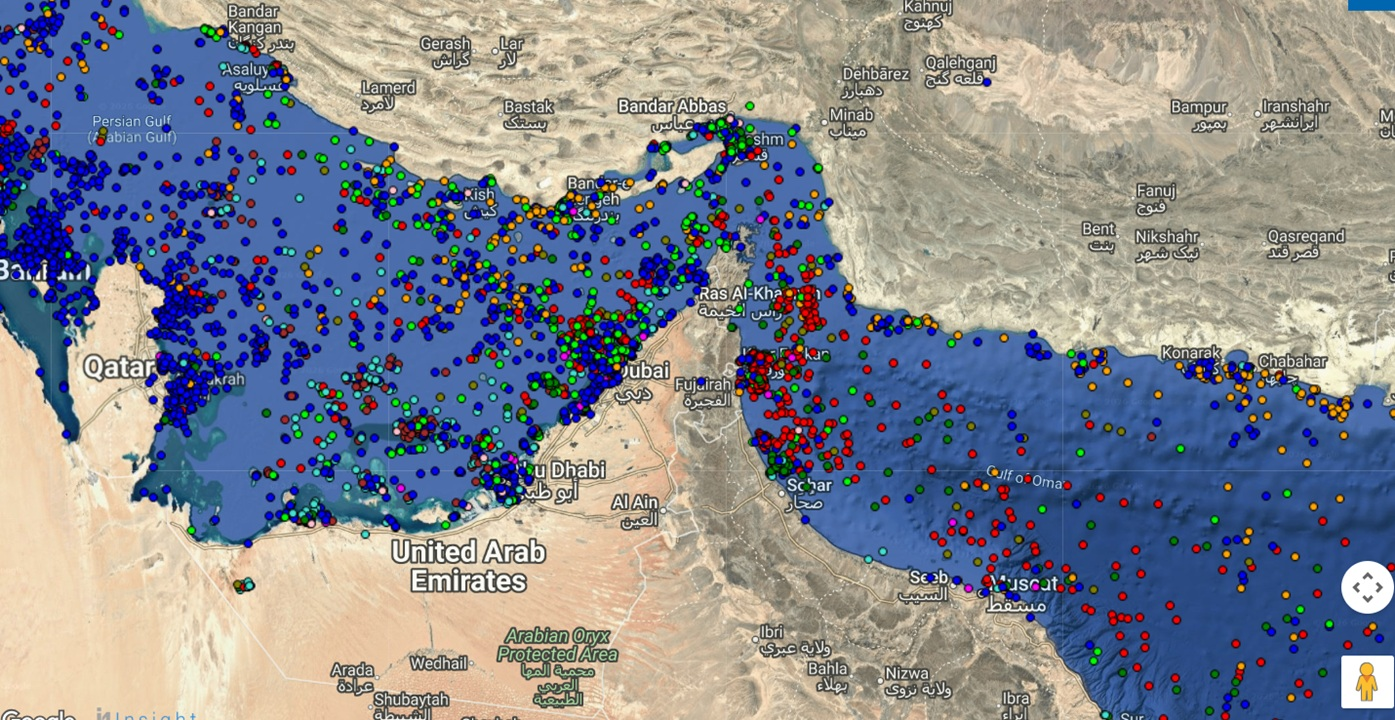
The Strait of Hormuz, one of the world’s busiest maritime chokepoints, continues to witness heavy commercial shipping traffic despite growing geopolitical tensions in the region.
The narrow waterway, which connects the Persian Gulf to the Gulf of Oman, serves as a vital route for global energy supplies, with nearly a fifth of the world’s oil shipments passing through it each day.
Recent tracking data has shown oil tankers, cargo vessels, and liquefied natural gas carriers continuing their voyages through the strait under heightened security measures. Shipping companies have reportedly adjusted routes, increased insurance coverage, and coordinated closely with naval forces operating in the region.
The increased monitoring follows concerns over regional instability that could disrupt international trade and energy markets. Any prolonged interruption to traffic through the Strait of Hormuz could significantly impact global oil prices and supply chains.
Maritime authorities and international naval coalitions continue to monitor vessel movements closely, urging commercial operators to remain vigilant while transiting the strategic waterway.
Energy analysts say the uninterrupted flow of ships remains critical to maintaining stability in global oil markets, even as diplomatic efforts continue to ease tensions in the Middle East.