

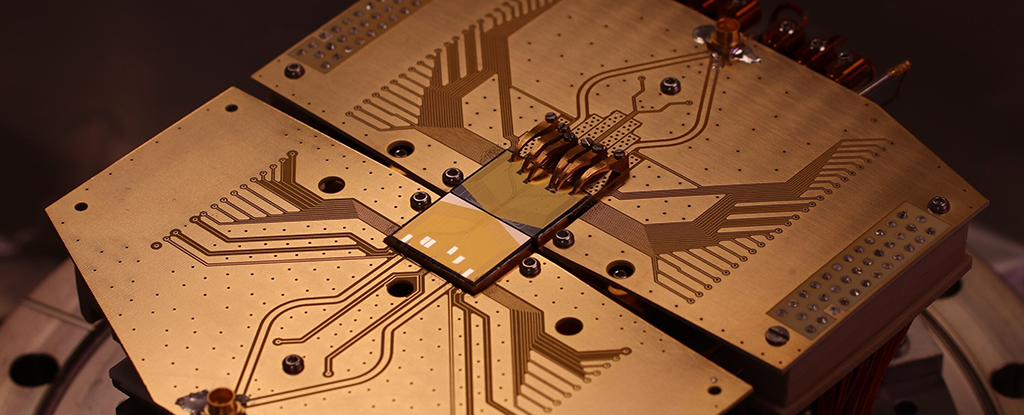
Researchers have announced significant advances in quantum technology that could accelerate the development of next-generation computers capable of solving problems beyond the reach of today’s most powerful machines.
One breakthrough involves a new quantum detector technology designed to improve the sensitivity of future gravitational-wave observatories and dark matter experiments. Scientists say the innovation could help unlock some of the deepest mysteries in modern physics.
In a separate development, researchers successfully demonstrated strong coupling between a single electron and a photon using superfluid helium, a milestone that strengthens one of the most promising platforms for building practical quantum computers.
The advances come as governments and technology companies around the world continue investing billions of dollars into quantum computing research. Experts believe future fault-tolerant quantum computers could revolutionize fields ranging from medicine and materials science to artificial intelligence, logistics, and cybersecurity.
Unlike conventional computers, which process information using bits represented by zeros and ones, quantum computers use quantum bits, or qubits, that can exist in multiple states simultaneously. This allows them to perform certain calculations exponentially faster than classical machines.
While practical large-scale quantum computers remain under development, the latest breakthroughs are being hailed as important milestones on the road toward making quantum technology a reality for industry, research, and society.