
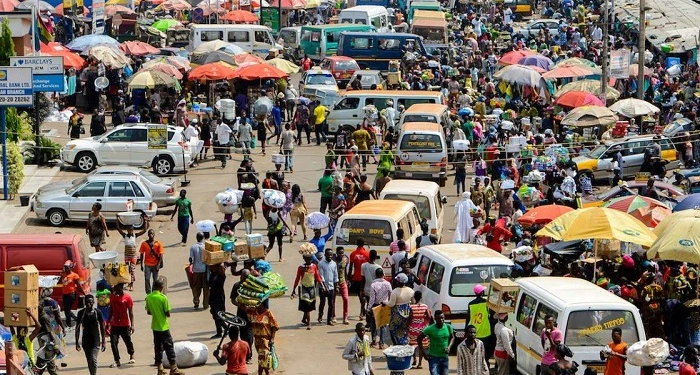
Thousands of commuters across the Greater Accra Region are facing growing transportation challenges as vehicle shortages, worsening traffic congestion, rising transport fares, and deteriorating road conditions continue to disrupt daily movement.
The situation has become increasingly difficult for workers, students, and traders who rely on commercial transport to travel to and from various parts of the capital.
Commuters from areas including Kasoa, Dawhenya, Lashibi, Nungua, Teshie, Tema, Pokuase, Nsawam, and other densely populated communities have reported spending several hours in queues while struggling to secure transportation during peak periods.
At major transport terminals, long lines of passengers have become a common sight as the demand for vehicles significantly exceeds available transport capacity.
Many commuters complain that the shortage of commercial vehicles has resulted in overcrowded terminals, extended waiting times, and widespread frustration among the travelling public.
The situation has also triggered concerns about unregulated fare increases. Passengers report paying significantly more than approved transport fares, particularly during rush hours when demand is highest.
On some routes, commuters say fares have nearly doubled as drivers and transport operators attempt to compensate for heavy traffic congestion and reduced trip frequency.
Another major concern is the growing practice of “short-loading,” where passengers are forced to disembark before reaching their intended destination and join additional queues to continue their journey. Many travellers argue that the practice increases both travel costs and commuting time.
Drivers, however, attribute the problem partly to severe traffic congestion across major highways and principal roads. According to transport operators, lengthy traffic delays reduce the number of trips vehicles can make each day, affecting earnings and vehicle availability.
The onset of the rainy season has further complicated matters, with flooding and damaged roads making several routes difficult to navigate and disrupting transport services.
Transport experts warn that without significant intervention, the situation could worsen as urban populations continue to grow and demand for public transportation increases.
Some commuters have called on government agencies and transport regulators to strengthen oversight of the sector, enforce approved fare structures, and accelerate investments in mass transit systems capable of serving the growing population.
Others have urged authorities to improve road infrastructure and expand public transport options to reduce dependence on informal commercial transport services.
For many residents, the transport crisis has become more than an inconvenience—it is now affecting productivity, increasing the cost of living, and placing additional financial pressure on households already grappling with economic challenges.
As frustrations mount, commuters hope that swift measures will be introduced to restore efficiency, affordability, and reliability to public transportation across the capital.