
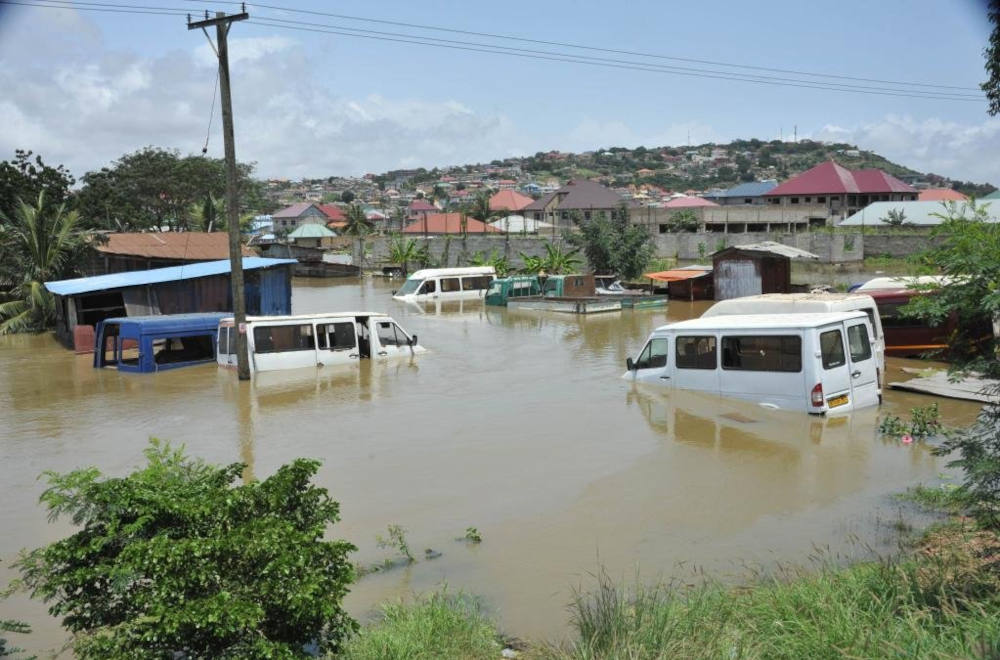
Heavy overnight and early morning rainfall has caused widespread flooding across several parts of Accra, leaving roads submerged, vehicles trapped in floodwaters, and commuters stranded as emergency officials continue to monitor the situation.
One of the worst-hit areas was Tse Addo, where multiple vehicles parked in front of residential apartment buildings were almost completely submerged after floodwaters rose rapidly. Images circulating on social media showed several cars nearly disappearing beneath muddy water, highlighting the severity of the flooding.
The torrential rains, which began late Sunday night and continued into Monday morning, overwhelmed drainage systems in several communities, causing floodwaters to spill onto major roads and residential areas.
The flooding significantly disrupted movement across the capital, with commuters experiencing long delays as several major roads became impassable or partially flooded. Traffic built up on key routes as motorists searched for alternative roads while others abandoned stalled vehicles.
Communities including Tse Addo, Teshie, Labadi, Adenta, Madina, Kaneshie, Weija, Achimota, Dzorwulu, East Legon, and portions of the George Walker Bush Highway reported varying degrees of flooding, with residents describing the downpour as one of the heaviest experienced this rainy season.
Some residents woke up to flooded compounds, damaged household property, and businesses inundated by water. Shop owners rushed to move goods to safer locations while others attempted to pump water out of their premises.
Emergency agencies have advised motorists to avoid flooded roads and refrain from attempting to drive through moving water, warning that flood levels can rise unexpectedly and pose life-threatening risks.
The National Disaster Management Organisation (NADMO) has begun assessing the extent of the damage while coordinating with local authorities to respond to emergencies in affected communities. Officials are also encouraging residents to report trapped persons and damaged infrastructure through emergency hotlines.
Meanwhile, the Ghana Meteorological Agency (GMet) has warned that more rainfall is expected in parts of southern Ghana over the coming days, urging residents living in flood-prone communities to remain alert and follow weather advisories.
Urban planning experts say the recurring floods once again expose long-standing challenges, including inadequate drainage infrastructure, blocked gutters, indiscriminate dumping of waste into drains, and construction along waterways.
Environmental advocates are calling for accelerated drainage improvement projects, stricter enforcement against illegal structures built on watercourses, and sustained public education on sanitation practices to reduce the impact of future flooding.
Government officials have assured the public that drainage maintenance and emergency response teams have been deployed to affected areas to assist residents and restore normal movement as quickly as possible.
As cleanup operations continue, authorities are urging the public to exercise caution, avoid unnecessary travel during heavy rainfall, and prioritise safety until floodwaters recede.