
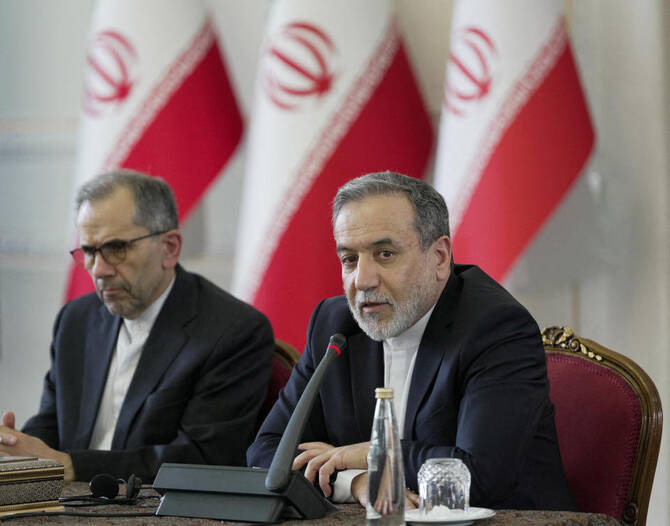
Iranian President Masoud Pezeshkian has declared that Iran will not make any concessions in any future negotiations with the United States, adopting one of his strongest positions yet amid renewed diplomatic tensions between Tehran and Washington.
Speaking during a public address, President Pezeshkian said Iran would defend its national interests and sovereignty under all circumstances, insisting that negotiations could only proceed on the basis of mutual respect rather than pressure or threats.
“We will not make any concessions in negotiations with the United States under any circumstances,” the President said, reaffirming Tehran’s long-standing position that it will not accept conditions it believes undermine the country’s independence or security.
His remarks come at a time when diplomatic efforts aimed at reviving talks over Iran’s nuclear program remain uncertain. Relations between the two countries have deteriorated in recent months following military confrontations, additional sanctions, and disagreements over regional security issues.
Iranian officials have repeatedly stated that while they remain open to dialogue, negotiations must not be conducted under coercion or economic pressure. Tehran continues to maintain that its nuclear program is intended solely for peaceful purposes, despite concerns raised by Western governments over uranium enrichment activities.
The United States has consistently called for stricter limits on Iran’s nuclear program and greater international oversight, while also demanding assurances regarding regional security and missile development. Washington has yet to officially respond to President Pezeshkian’s latest comments.
International observers believe the President’s statement reflects growing domestic pressure within Iran to maintain a firm negotiating stance following recent geopolitical developments. Analysts say the remarks could complicate efforts by mediators seeking to restart diplomatic discussions between the two countries.
Regional experts also warn that continued deadlock between Tehran and Washington may prolong economic uncertainty in Iran while increasing tensions across the Middle East, where several ongoing conflicts remain closely linked to relations between the two nations.
The International Atomic Energy Agency (IAEA) has continued to monitor Iran’s nuclear activities while encouraging all parties to pursue diplomatic solutions aimed at preventing further escalation.
Despite the hardline rhetoric, diplomats note that channels of communication between Iran and the United States have not been completely closed, leaving open the possibility of future indirect negotiations if both sides agree on acceptable conditions.
As the international community watches closely, President Pezeshian’s remarks signal that any future agreement will likely require significant diplomatic compromise from both Tehran and Washington to overcome years of mistrust and political hostility.