

Technology giant NVIDIA has announced a breakthrough data center cooling technology that could dramatically reduce water consumption in artificial intelligence (AI) facilities, addressing one of the industry’s biggest environmental concerns.
The company revealed a new warm-water liquid cooling system designed for its next-generation AI infrastructure, claiming it can reduce cooling-related water use from millions of gallons per year to almost zero. The announcement comes as AI data centers face growing scrutiny over their massive energy and water demands.
A Major Shift in Data Center Cooling
Traditional data centers often rely on cooling towers and chilled water systems that consume enormous amounts of water to prevent servers from overheating.
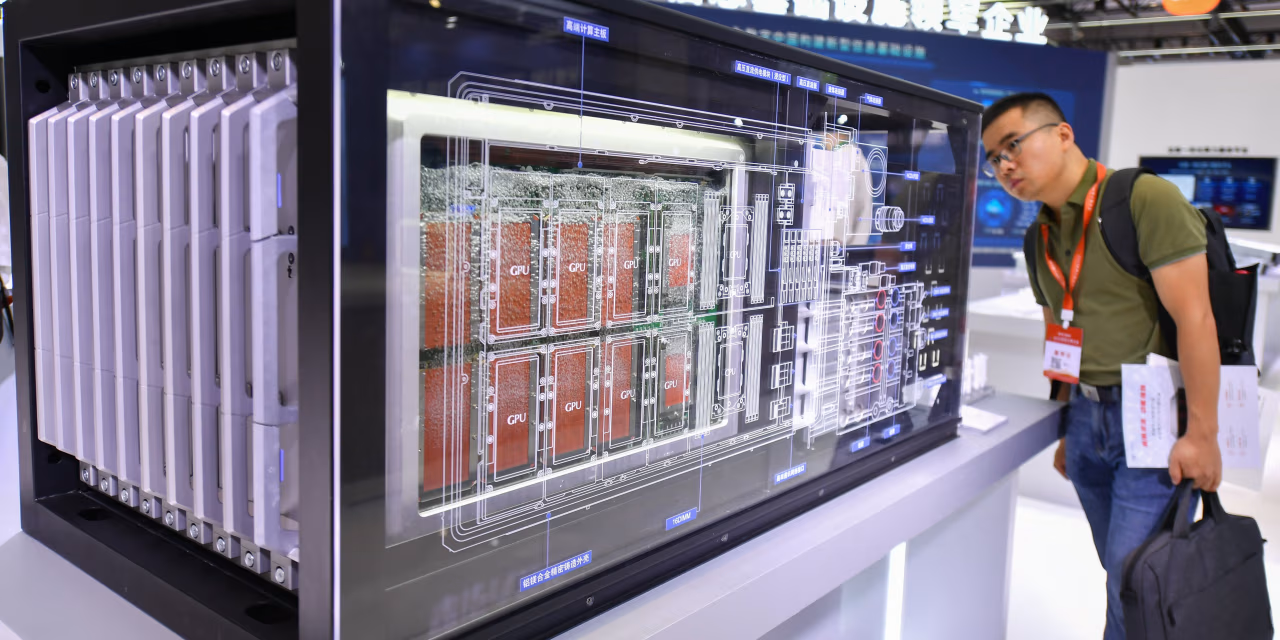
NVIDIA’s new approach instead uses a fully liquid-cooled architecture that allows AI servers to operate at significantly higher temperatures—up to 45°C (113°F)—while maintaining performance and efficiency. The heat is captured directly from computer chips and transferred through high-temperature liquid loops.
According to NVIDIA’s sustainability team, the system can reduce water consumption from approximately 2.6 million gallons per megawatt annually under conventional cooling methods to near zero.
Why It Matters
The rapid expansion of AI has sparked concerns worldwide about the environmental impact of massive data centers. Communities in several countries have questioned the industry’s growing demand for electricity and freshwater resources.
By eliminating the need for traditional cooling towers and reducing dependence on chillers, NVIDIA believes its new design could significantly improve the sustainability of future AI facilities.
Industry experts say cooling accounts for a substantial portion of a data center’s operating costs, meaning the technology could also lower expenses while improving efficiency.
Industry Reaction
The announcement has generated excitement across the technology sector, with cloud providers and data center operators closely monitoring the development.
However, some analysts caution that while the technology may dramatically reduce water used directly for cooling, it does not completely eliminate the broader environmental footprint associated with AI infrastructure. Electricity generation, facility construction, and the rapid expansion of AI computing remain significant sustainability challenges.
Online discussions have also highlighted that the system relies on a closed-loop liquid design, meaning water is recycled repeatedly rather than continuously consumed. Many experts view this as a major improvement over traditional evaporative cooling systems.
The Future of AI Infrastructure
NVIDIA’s latest innovation forms part of its upcoming Vera Rubin AI architecture, which is expected to power the next generation of AI supercomputers and hyperscale data centers. The company says many future facilities are already being designed around warm-water cooling technologies capable of operating without conventional chillers.
If widely adopted, the technology could mark one of the most significant changes in data center design in years, helping the AI industry address mounting concerns over water usage while supporting continued growth in computing power.
As the global race for AI dominance accelerates, innovations that balance performance with sustainability are likely to play an increasingly important role in shaping the future of the technology sector.