

Once the school pick-up routine begins in the afternoon, it can feel like mental arithmetic getting everyone to the right place at the right time: One child has math tutoring from 2 to 4 p.m., and then it’s straight to soccer practice from 4:30 to 7. The other has dance class from 5 to 8 p.m., and then the whole family isn’t home until after 9 p.m. And then somewhere in there, you were supposed to eat Taco Tuesday leftovers together as a family.
When families consistently share meals, experts say, they enjoy an abundance of benefits — such as improved emotional satisfaction and healthier diets — but finding the time to sit down together every night can sound like a tall order.
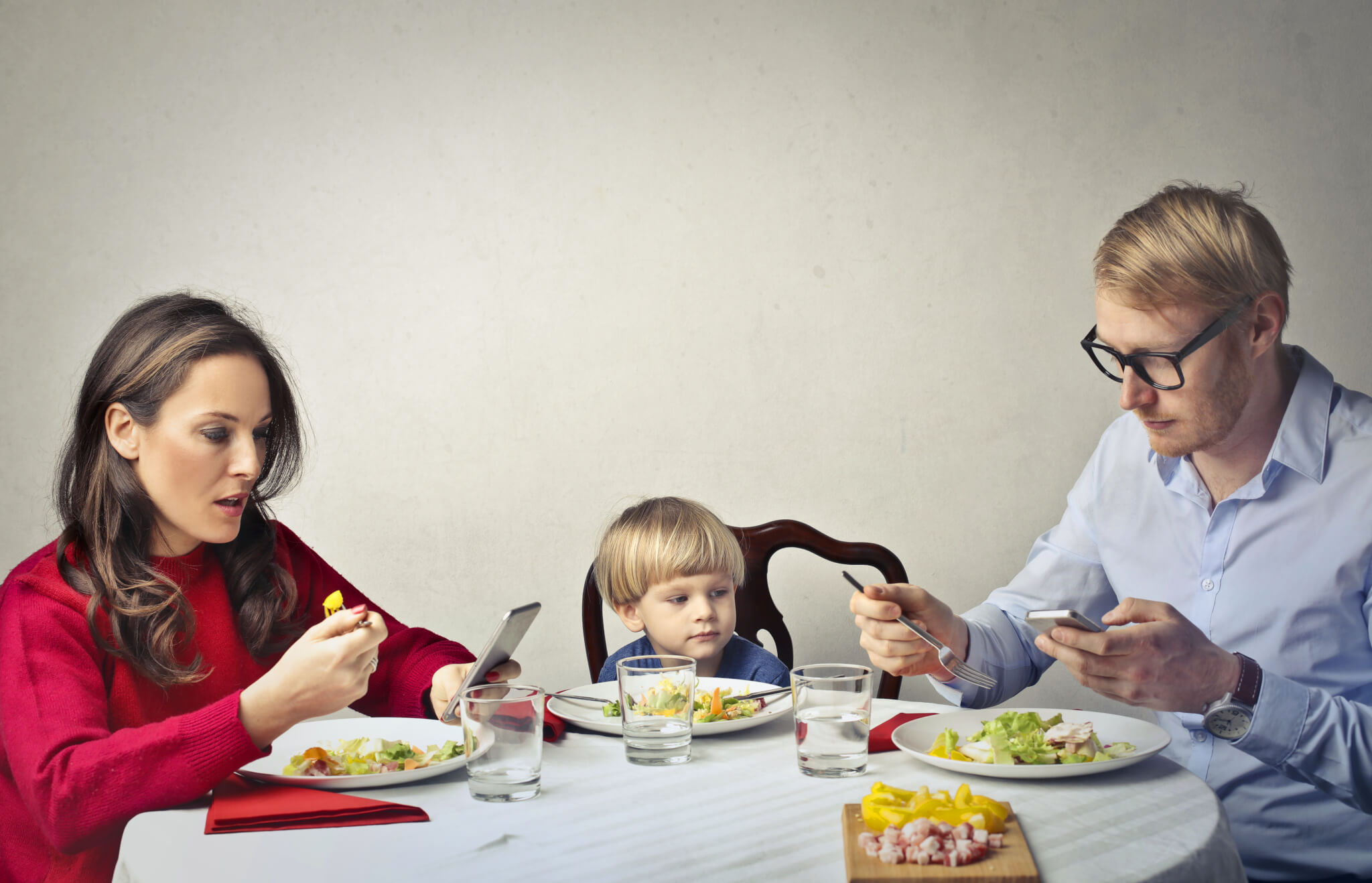
Even for those families that manage to make a shared meals a reality, the pervasive use of media like smartphones and TVs during mealtimes is yet another factor that hampers connection.
According to a new study that surveyed over 350 parents, more than 75% reported media use during their last family meal, with the most common type being smartphone use. Additionally, the parents reported that their children — whose ages ranged from 4 to 10 — were almost as likely to have used media, with nearly 70% of children also engaging in some form of media use. The findings were published Monday in the journal JAMA Pediatrics.Media use is finding its way into our lives more than we may realize, said Cecilia Sada Garibay, a co-author on the study and a Ph.D. candidate at the University of Arizona. Sada Garibay hopes that with this in mind, parents will be more aware of how their devices may be affecting their most personal relationships: the ones they have with their children.“If you have your device and you’re constantly checking it at the table, it can affect a valuable moment parents have with their children in the day, and it can have some effect on the relationship they have with their children,” said Sada Garibay, who is also a professor at the School of Communication in the Universidad Panamericana studying social media effects.
Researchers have established that when families consistently sit down together to eat, the whole family reaps experiences numerous benefits, including healthier eating, lower risk of substance use among teenagers and greater emotional satisfaction.
But according to Sada Garibay and other experts, the mealtime on its own is not the magic ingredient to these benefits.
What makes family dinner so beneficial?
Some benefits associated with family dinners are related to the food on the table, such as lower rates of obesity. But when it comes to the emotional benefits, “it’s actually not what’s at the meal at all that matters,” said Dr. Margie Skeer, a public health and community medicine professor in the Tufts University School of Medicine who researches how family meals can protect adolescents from a slew of dangers.“It’s that family meals can provide a built-in space for checking in, sharing feelings, emotions. It’s consistent family connection,” said Skeer, who was not involved with the new research. Plus, when parents make the time to connect with their children at distraction-free family dinners, the kids realize that “they’re actually being prioritized, because we do live in a very busy world.”
Sada Garibay recognizes that time can be in short supply for parents: “I know; I have four children.” But in her view, this means it is more important than ever to find the time for family dinners.Dr. Anne Fishel, an associate professor of psychology at Harvard Medical School and director of Massachusetts General Hospital’s Family and Couples Therapy Program, founded the Family Dinner Project in 2010 to educate parents on how they can gain the benefits of family dinners amid busy schedules.