
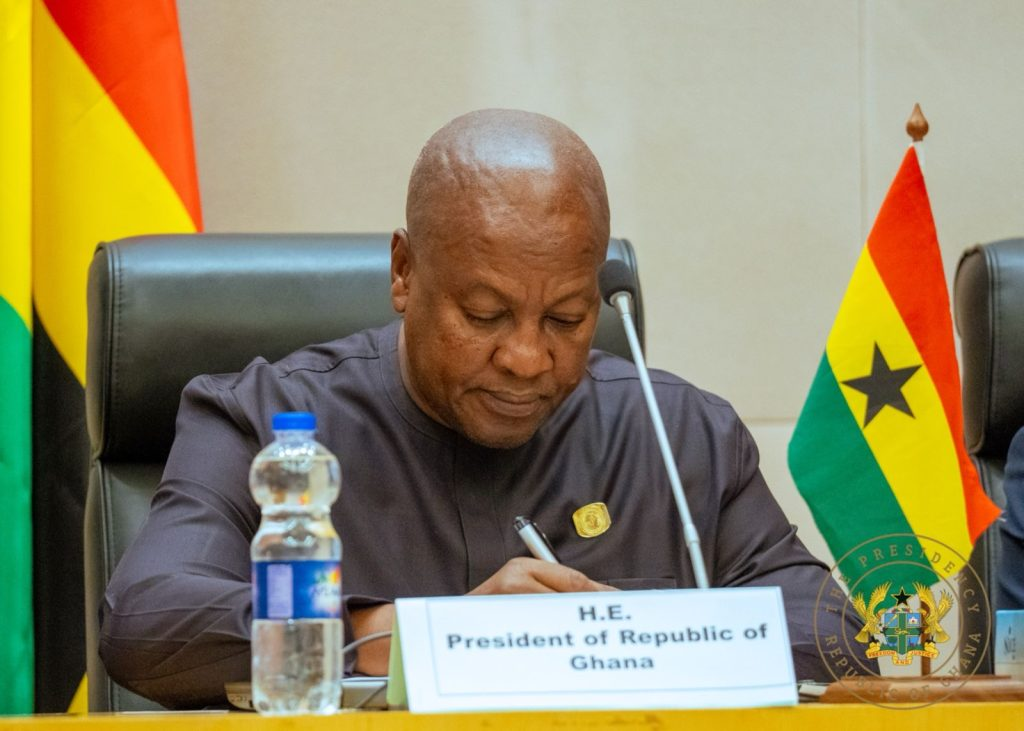
President John Dramani Mahama has announced plans to establish a new administrative city outside Accra as part of a long-term strategy to reduce congestion in the national capital and improve Ghana’s resilience to recurring floods following what officials have described as the worst flooding event in Accra’s history.
The announcement came after the President conducted an aerial assessment of flood-affected communities, where he observed widespread destruction to homes, businesses, roads, and critical infrastructure caused by the torrential rains that inundated large sections of the capital.
Speaking after the inspection, President Mahama said the scale of the disaster demonstrated that Ghana could no longer rely on outdated urban planning models, warning that increasingly intense rainfall linked to climate change requires a complete rethink of how cities are developed and managed.
According to the President, the proposed administrative city would eventually accommodate key government ministries, departments, and agencies, reducing pressure on Accra’s overstretched infrastructure while promoting more balanced national development.
He explained that relocating major public institutions would help decongest the capital, improve traffic flow, reduce environmental stress, and create opportunities for planned urban expansion in safer locations less vulnerable to flooding.
As part of government’s immediate response to the disaster, President Mahama directed the Ministry of Finance to release contingency funds through the National Disaster Management Organization (NADMO) to support emergency relief operations, assist displaced families, and provide aid to affected communities.
He also instructed Metropolitan, Municipal and District Assemblies (MMDAs) across the Greater Accra Region to identify and remove structures illegally built on waterways and drainage corridors, stressing that such developments have significantly worsened flooding over the years.
The President warned that government would no longer tolerate unauthorized construction that obstructs natural watercourses, stating that protecting lives and public infrastructure must take precedence over illegal developments.
Beyond infrastructure reforms, President Mahama appealed for a national change in public attitudes toward sanitation and environmental responsibility, arguing that indiscriminate dumping of refuse into drains continues to contribute significantly to urban flooding.
He urged residents to adopt responsible waste disposal practices and support sanitation campaigns aimed at keeping drainage systems free from plastic waste, silt, and other debris that impede the free flow of stormwater.
Urban planning experts have welcomed the proposal for a new administrative city, describing it as a bold long-term solution that could reduce population pressure on Accra while allowing government to build modern infrastructure designed to withstand future climate-related disasters.
Environmental specialists, however, emphasized that relocation alone will not solve Ghana’s flooding challenges unless accompanied by stricter enforcement of planning regulations, expanded drainage infrastructure, regular desilting of drains, and sustained public education on environmental protection.
The devastating floods left several communities submerged, displaced hundreds of residents, damaged public infrastructure, and disrupted economic activity across the capital, once again highlighting the urgent need for comprehensive flood mitigation measures.
Government says feasibility studies and stakeholder consultations on the proposed administrative city will begin in the coming months as part of a broader national strategy to build more climate-resilient and sustainable urban centers.