
Ghana is grappling with the aftermath of one of the most destructive flooding disasters in recent years after torrential rainfall triggered widespread flooding across Accra and surrounding communities, claiming lives, destroying homes, displacing families, and causing extensive damage to public infrastructure and private property.
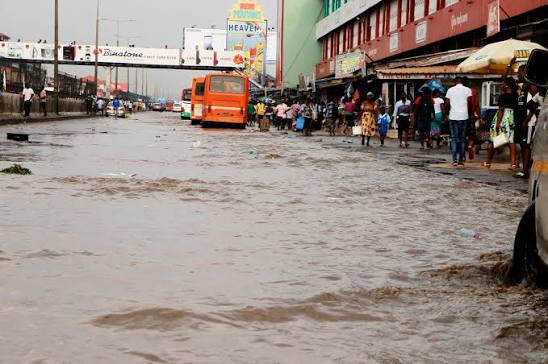
The heavy downpour, which lasted for several hours, overwhelmed drainage systems across the capital, causing floodwaters to inundate major roads, residential communities, markets, schools, and business districts. Entire neighbourhoods were left submerged as vehicles, homes, and commercial properties disappeared beneath rapidly rising floodwaters.
Rescue teams, volunteers, and security personnel worked through the day and into the night to evacuate stranded residents from flooded buildings, rescue motorists trapped inside submerged vehicles, and assist vulnerable families seeking shelter in safer locations.
Several deaths have been confirmed, while others sustained injuries during the disaster. Authorities fear the number of casualties could increase as search and rescue operations continue in some of the hardest-hit communities.
Thousands of residents have been displaced after floodwaters swept through homes, leaving families without shelter or access to essential belongings. Many victims lost furniture, electrical appliances, clothing, food supplies, important documents, and other personal possessions accumulated over many years.
Business owners have also suffered significant financial losses. Shops, pharmacies, warehouses, restaurants, and market stalls were inundated, destroying merchandise worth millions of cedis and forcing many businesses to suspend operations indefinitely.
The transportation sector was among the hardest hit. Major roads became impassable as floodwaters submerged vehicles, stalled public transport, and created hours of traffic congestion across the capital. Numerous cars were abandoned after becoming trapped in deep water, while several roads sustained severe structural damage.
Electricity and water supply were disrupted in parts of the city as utility providers temporarily disconnected services in affected areas to ensure public safety. Telecommunications networks also experienced intermittent disruptions in some communities.
Hospitals and emergency medical facilities reported increased admissions for injuries, exposure-related illnesses, and waterborne infections, while health authorities warned residents to avoid contact with contaminated floodwater due to the heightened risk of disease outbreaks.
The National Disaster Management Organization (NADMO) has begun distributing relief items, including food, drinking water, mattresses, blankets, and temporary shelter materials to affected families. Government has also released emergency contingency funds to support ongoing rescue and relief operations.
Following an aerial inspection of the disaster zones, President John Dramani Mahama described the flooding as one of the worst natural disasters to affect the capital in recent history. He announced a series of immediate interventions, including emergency financial assistance, intensified drainage rehabilitation, and the demolition of structures illegally built on waterways.
The President also unveiled plans to establish a new administrative city outside Accra as part of a long-term strategy to reduce pressure on the capital and improve national resilience against future flooding.
According to preliminary data presented by government, approximately 140 millimeters of rainfall fell within a short period—one of the highest single-day rainfall totals recorded in recent years. Officials believe the unprecedented rainfall, coupled with blocked drains, uncontrolled urban development, and construction on waterways, significantly contributed to the scale of the disaster.
Environmental experts have renewed calls for comprehensive reforms in urban planning, stronger enforcement of building regulations, expanded drainage infrastructure, and improved waste management practices to reduce the country’s vulnerability to future floods.
Community leaders have also urged citizens to change long-standing habits of indiscriminate refuse disposal, warning that plastic waste continues to clog drains and worsen flooding whenever heavy rains occur.
As floodwaters gradually recede in some areas, thousands of families now face the daunting task of rebuilding their lives. Schools, businesses, and public institutions are assessing the extent of the damage, while engineers evaluate roads, bridges, and drainage systems affected by the disaster.
Across Ghana, messages of sympathy and solidarity continue to pour in from individuals, religious organizations, corporate institutions, and development partners, many of whom have begun mobilizing humanitarian assistance for flood victims.
Although the cleanup has begun, many residents say the emotional and financial scars left by the disaster will remain for years. For countless families who lost loved ones, homes, and livelihoods, the floods represent not only a natural disaster but a painful reminder of the urgent need for lasting solutions to Ghana’s recurring flooding crisis.