
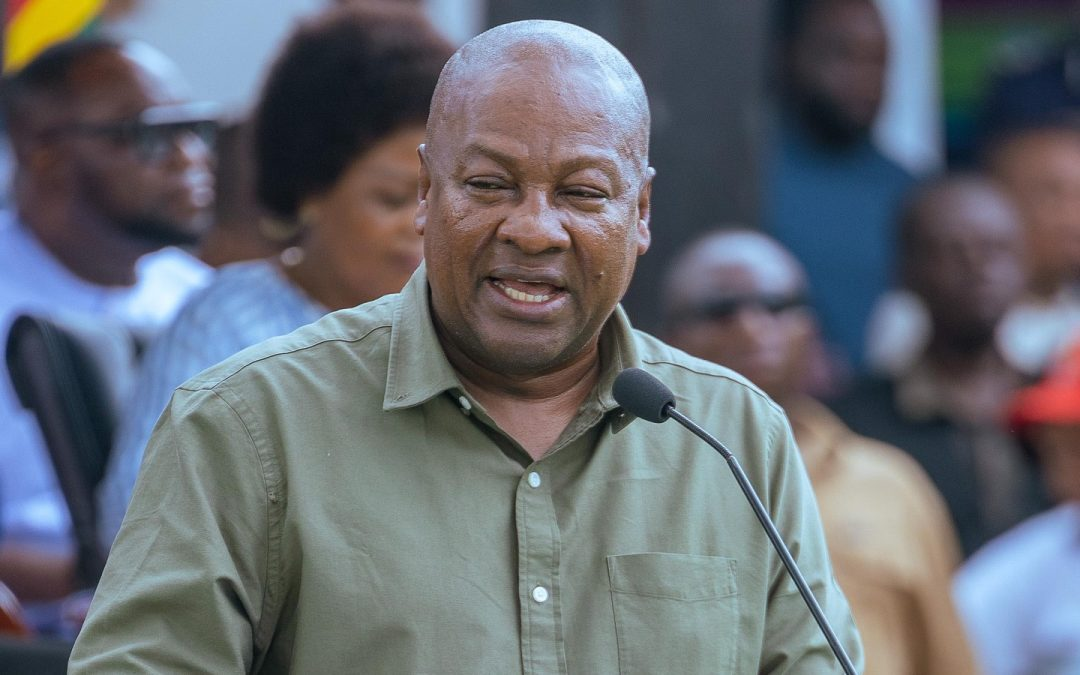
President John Dramani Mahama has announced that Ghana is on course to record its first significant increase in crude oil production in several years, describing the development as a major turning point for the country’s petroleum industry.
Speaking during the presentation of his administration’s economic agenda, President Mahama said new investments, renewed exploration activities, and improvements in existing oil fields are expected to reverse the steady decline in national crude output experienced over recent years.
According to the President, government policies aimed at restoring investor confidence and accelerating upstream petroleum development are beginning to yield positive results. He noted that the anticipated increase in production will strengthen government revenue, improve foreign exchange earnings, and contribute to Ghana’s broader economic recovery.
Ghana’s crude oil production has fallen in recent years as several mature fields experienced natural production declines and investment in new exploration slowed. Industry analysts have repeatedly warned that without fresh investment and additional discoveries, output could continue to weaken, affecting petroleum revenues and economic growth.
President Mahama said ongoing developments in the offshore Jubilee, TEN and Sankofa fields, together with planned investments by international oil companies and local stakeholders, are expected to increase production capacity over the coming years. He also reaffirmed his administration’s commitment to ensuring that Ghana’s petroleum resources are managed transparently and sustainably for the benefit of all citizens.
The President stressed that increased oil production alone would not guarantee economic prosperity, adding that government intends to channel petroleum revenues into infrastructure, education, healthcare, industrialisation and job creation while strengthening local participation in the oil and gas value chain.
Energy experts have welcomed the announcement, noting that a sustained increase in crude production could improve Ghana’s fiscal position, support the cedi, and attract additional investment into the country’s energy sector, provided production targets are achieved and global oil market conditions remain favourable.