
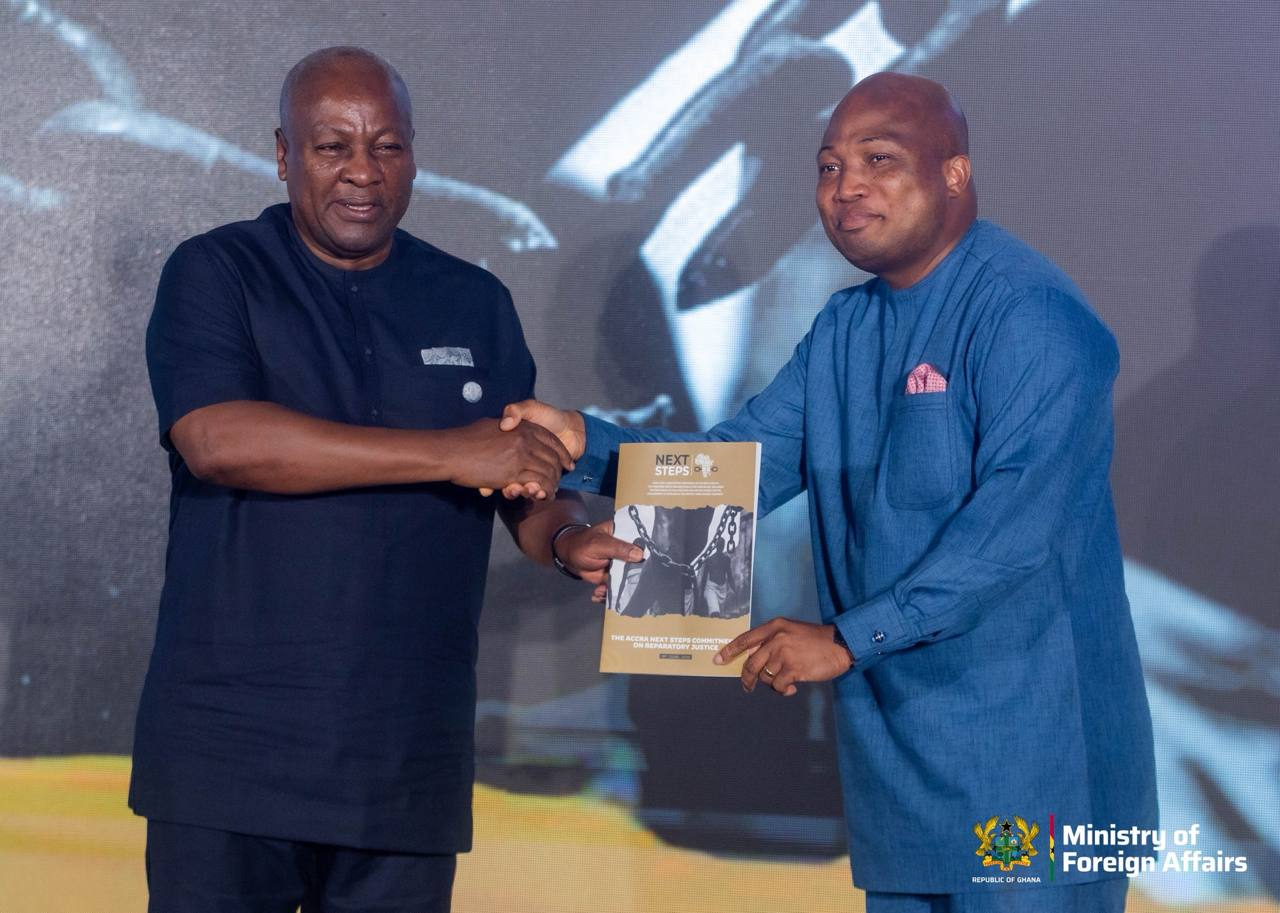
Ghana is set to establish a modern museum dedicated to the history and legacy of the transatlantic slave trade following a key commitment unveiled by President John Dramani Mahama during the Accra Next Steps Conference.
The proposed institution is expected to become one of the most significant heritage and cultural projects in Africa, serving as a center for remembrance, education, research, and reconciliation while preserving the history of millions of Africans who were forcibly taken from the continent during the transatlantic slave trade.
Preserving a Painful History
According to the Accra Next Steps Commitments, the museum will be dedicated to remembering the victims of transatlantic enslavement, honoring the resilience of African ancestors, and promoting truth-telling about one of humanity’s darkest chapters.
The project forms part of broader efforts to advance discussions on reparative justice, historical accountability, and the recognition of the enduring impact of slavery on African societies and the African diaspora.
Government officials believe the museum will provide future generations with a deeper understanding of the transatlantic slave trade and its lasting consequences across the world.
Home for Returning African Artefacts
One of the museum’s most significant functions will be to serve as a repository for looted and stolen African artefacts being repatriated from museums and institutions across Europe and North America.
In recent years, several countries and cultural institutions have begun returning artefacts acquired during the colonial era, responding to growing calls for restitution and historical justice.
The proposed museum will provide a world-class facility for preserving, exhibiting, and studying these cultural treasures while ensuring they remain accessible to the public.
Experts say the initiative could position Ghana as a leading destination for the preservation and interpretation of African heritage.
Boost for Tourism and Economic Growth
Beyond its historical and cultural significance, the museum is expected to generate substantial economic benefits.
Tourism analysts predict that the facility could attract thousands of visitors annually, including members of the African diaspora seeking to reconnect with their ancestral roots.
The project is expected to complement existing heritage attractions such as the slave castles at Cape Coast and Elmina, further strengthening Ghana’s reputation as a leading destination for heritage tourism.
Officials believe the development could create hundreds of direct and indirect jobs in construction, hospitality, tourism services, education, research, and museum management.
Design Competition Planned
The government has indicated that a competitive and transparent international design competition will be organized to select the museum’s architectural concept.
Particular emphasis is expected to be placed on ensuring participation by African architects and designers of African descent, reflecting the museum’s mission and cultural significance.
Stakeholders hope the project will produce an iconic structure capable of becoming a symbol of remembrance, resilience, and African identity.
Advancing the Global Reparations Agenda
The museum initiative emerges at a time when conversations about reparations and historical justice are gaining momentum globally.
The Accra Next Steps Conference brought together heads of state, diplomats, scholars, activists, and cultural leaders to discuss practical measures aimed at addressing the legacy of slavery and colonialism.
Supporters of the initiative argue that the museum will serve not only as a place of remembrance but also as a platform for dialogue, education, and healing.
As Ghana continues to position itself at the forefront of global discussions on reparative justice, the proposed museum is being viewed as a transformative project that could leave a lasting legacy for future generations.
If realized, the institution could become one of Africa’s most important cultural landmarks, strengthening Ghana’s role as a custodian of African history and a bridge between the continent and its global diaspora.