
Rescue teams are working around the clock to search for survivors following two powerful earthquakes that struck Venezuela, leaving widespread destruction across several regions and prompting a major international humanitarian response.
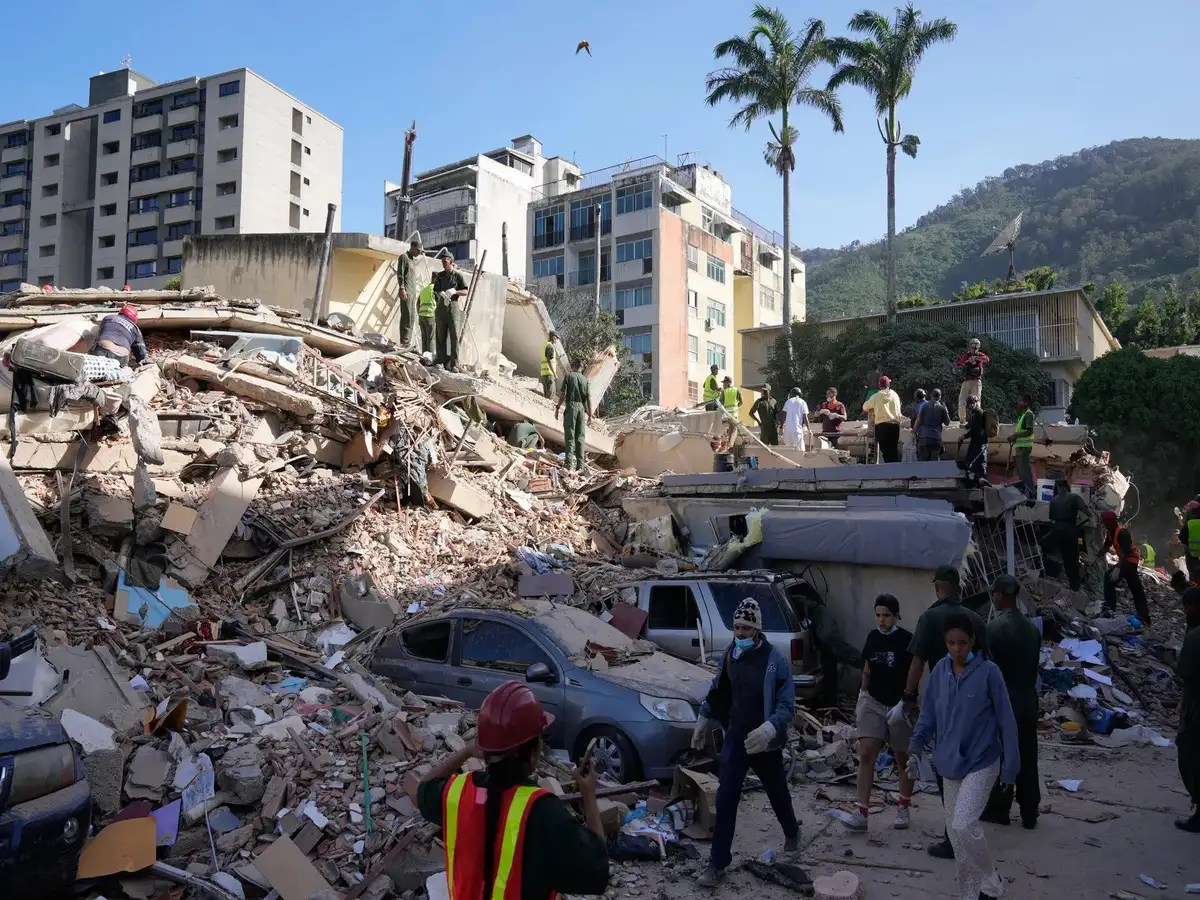
The twin earthquakes, measured at magnitudes 7.2 and 7.5, struck less than a minute apart on June 24, causing buildings to collapse, roads to crack, and critical infrastructure to suffer extensive damage. Authorities say at least 188 people have lost their lives, while more than 1,500 others have been injured. Hundreds are still believed to be trapped beneath the rubble, with emergency crews continuing search-and-rescue operations despite the threat of aftershocks.
The worst-hit areas include La Guaira, where dozens of residential and commercial buildings were reduced to rubble. Rescue personnel, aided by sniffer dogs, heavy machinery, and thermal imaging equipment, are combing through collapsed structures in the hope of locating survivors. Hospitals in affected regions have been overwhelmed as medical workers treat a steady stream of injured residents.
The disaster has triggered an unprecedented international relief effort. The United Nations is coordinating the deployment of Urban Search and Rescue (USAR) teams and emergency humanitarian assistance. Several countries, including the United States, Mexico, Colombia, France, Spain, Italy, Brazil, and Canada, have pledged personnel, medical supplies, search equipment, and financial assistance to support Venezuela’s recovery.
The United States announced a humanitarian assistance package valued at $150 million, while rescue specialists and logistical support teams have already begun arriving in the country. Mexico and Colombia have dispatched trained rescue workers and emergency medical teams, while European nations have mobilized specialized equipment and humanitarian aid.
International aid organizations, including Save the Children and World Central Kitchen, have also launched emergency operations to provide food, clean water, temporary shelter, and medical assistance to thousands of displaced families. Relief agencies warn that children remain among the most vulnerable, with many forced to sleep outdoors after their homes were destroyed.
Humanitarian officials have cautioned that the earthquake has worsened an already fragile situation in Venezuela, where millions of people were already in need of assistance before the disaster struck. Damage to roads, communication networks, and electricity supplies has complicated rescue operations and slowed the delivery of emergency aid.
Officials continue to urge residents to remain vigilant as aftershocks persist across the affected regions. Search-and-rescue operations are expected to continue for several days, with authorities emphasizing that every effort is being made to locate those still missing.
As nations around the world unite in support of Venezuela, the focus remains on saving lives, delivering urgent humanitarian assistance, and helping communities begin the long process of recovery from one of the country’s deadliest natural disasters in recent history.