
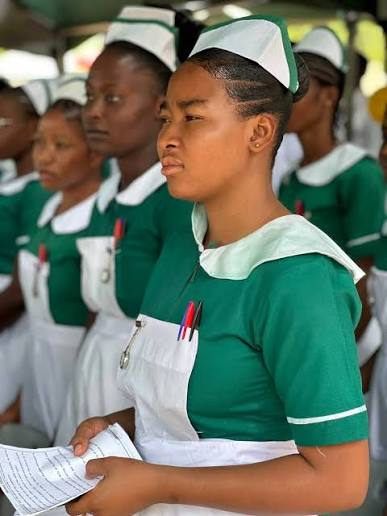
The Ghanaian government is considering a significant reduction in the number of students admitted into public health training institutions (nursing and allied health colleges) annually to address the growing unemployment backlog in the health sector.
Health Minister, Hon. Kwabena Mintah Akandoh, made the revelation while speaking at a health event in Accra. He noted that the country currently admits between 34,000 to 35,000 students every year into various health training programmes, but the rate at which the government can recruit and absorb these graduates into the public health system is much lower.
“What’s the point if we are training more and we cannot recruit them?” — Hon. Kwabena Mintah Akandoh
The Minister explained that without intervention, the backlog of unemployed health professionals could reach 180,000 by 2028. He suggested that resources currently used for training excess numbers could be redirected toward better equipping existing facilities and recruiting already trained professionals.
Background
This proposal comes amid concerns over the high number of trained nurses, midwives, and allied health workers who remain unemployed or underemployed after graduation. Many graduates have protested in the past, calling on the government to post them to health facilities.
Mixed Reactions
- Supporters argue it is a practical and responsible decision to avoid producing more unemployed graduates.
- Critics worry that reducing admissions could worsen the already strained doctor-to-patient and nurse-to-patient ratios in Ghana’s healthcare system, potentially leading to longer waiting times and poorer healthcare delivery, especially in rural areas.
The government has not yet announced the exact percentage of reduction or implementation timeline, but discussions are ongoing.
This development comes shortly after the Ministry reduced the cost of application forms for the 2025/2026 academic year from GH¢200 to GH¢150.